|
|
|

- Appropriate
legal framework for Investments
- Excellent Macroeconomics
achievements
- Competitive
access to international markets
- Qualified and
competitive labor force
- Bilateral and
plurilateral agreements which facilitate investment and accelerate commercial
development
- The country
with the largest natural resources of the Central American region
- Nicaragua's
geographic advantages
- Consolidation
of Democracy
- Progressive
development of the infrastructure
|
|
1. APPROPRIATE LEGAL
FRAMEWORK FOR INVESTMENTS
- The right to repatriate 100% of profits.
- The right to repatriate 100% of the invested capital,
after the first three years.
- Free market economy.
- Right to unlimited foreign investment participation
in capital investments including the right to 100% foreign ownership
in most industries.
- Access to the incentives granted by the Law, according
to economic activity.

|
|
2. EXCELLENT MACROECONOMICS
ACHIEVEMENTS
- Highest economic growth (GDP) of the Central America
region (5.5% in 1996.)
- Second lowest inflation rate in Central America (
10.8% in 1996).
- Export growth at a 33% annual rate during the period
1993-1996.
- Progressive growth of private investment with a 10%
average annual rate during the period 1994-1996.
- Significant growth of the internal savings rate.
- Private banking holds 70% of total deposits.

|
|
3. COMPETITIVE ACCESS
TO INTERNATIONAL MARKETS
- Central American Common Market.
- Central American Integration Treaty (CA-4):
- Free movement of capital, services and labor.
- Modern legal framework to expedite commerce in
the region.
- Free Trade Agreement.
- Access to 27 million consumers.
- Free Trade Agreements with Dominican Republic and
Mexico:
- Preferential access to over 140 million consumers.
- Preferential treatment (SGP) with the United States,
European Union and Canada:
- Preferential access to over 500 million consumers.
- There are no quotas for the textile industry.
|
|

4. QUALIFIED AND COMPETITIVE
LABOR FORCE
- 65% of the population is younger than 25 years of
age.
- Average cost of labor is US$0.67/hour, including social
benefits.
- An educational system made up of national and foreign
universities, which have contributed to the creation of a very efficient
labor force.
- The majority of professionals can work in several
languages: English, French, German, Portuguese, Russian and Italian.
- Literacy rate of 85%.
- Free hiring of foreign professionals at the administrative
level.

|
|
5. BILATERAL AND PLURILATERAL
AGREEMENTS WHICH FACILITATE INVESTMENT AND ACCELERATE COMMERCIAL DEVELOPMENT
- Free Trade Agreement with Mexico.
- Free Trade Agreement of the Americas.
- Bilateral agreements for the reciprocal promotion
and protection of investments, signed with: Taiwan-Republic of China,
Spain, United States, Denmark and Germany.
- In the process of negotiation with: Netherlands, United
Kingdom of Great Britain and Northern Ireland, Switzerland, South Korea,
Ecuador, the Russian Federation, Bulgaria and Chile.

|
|
6. THE COUNTRY WITH THE
LARGEST NATURAL RESOURCES OF THE CENTRAL AMERICAN REGION
- 3.6 million hectares with agricultural potential,
of which, at present, less than 20 percent are being cultivated.
- 1.3 million hectares with potential of livestock production.
- The most fertile land of the region, with excellent
volcanic loam soils and with great water reserves for irrigation.
- The lowest cost of land in Central America.
- It has 8 gold and silver mines, which in the 70s produced
US$150 million.
- 60% of the total area of the national territory (60,000
square kilometers) is forest.
- It has the greatest diversity of forestry species
in the Central American region.
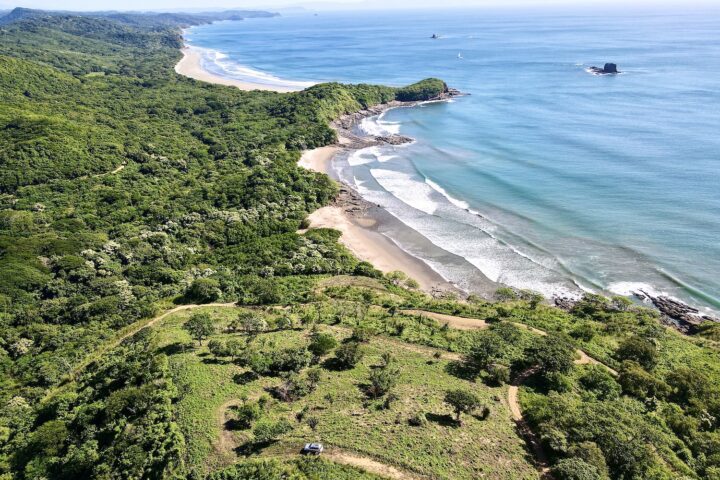
- The Caribbean maritime shelf with 551 kilometers of
expanse, is the richest of Central America.
- The Pacific has 410 kilometers with similar attributes
and with a potential of 39,000 hectares ( 1hectare = 2.47 acres ) for
shrimp farming, equivalent to one-third of the Central American and
Panama potential.
- It has 10,338 of continental waters and 7,365 kilometers
of water stemming from rivers. These conditions allow Nicaragua to be
the ideal country for Tilapia and Carp farming.
- The Great Lake of Nicaragua has an exploitable biomass
of 50,000 tons per year, with permission to catch 8,000 tons per year.
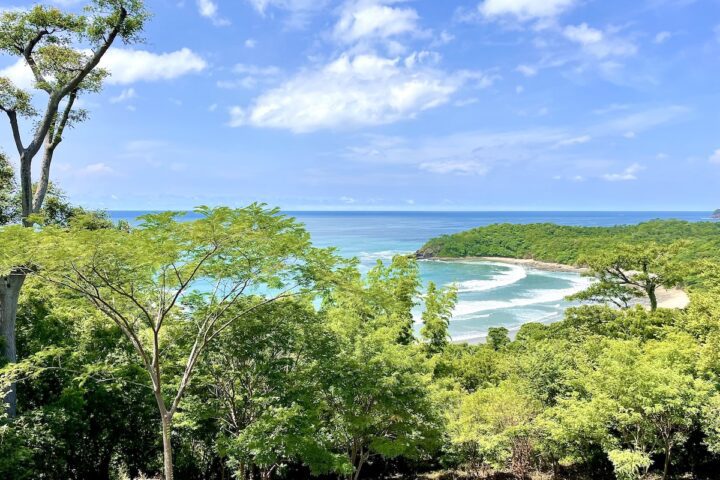
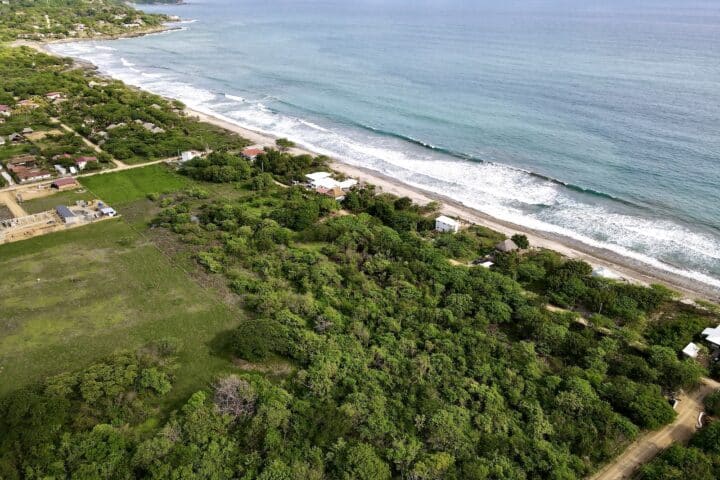
- Highly diversified tourism potential.

|
|

7. NICARAGUAS GEOGRAPHIC
ADVANTAGES
- Nicaragua is located in the heart of American Continent
which allows:
- Quick access to large markets such as NAFTA and
MERCOSUR.
- Contact with Miami, Houston and New Orleans in
three hours by air.
- Contact with any maritime port n the Gulf area
and Miami in four navigable days.
- Access to the country by both Oceans.
|
|
8. CONSOLIDATION OF DEMOCRACY
- The Political Constitution of Nicaragua does not discriminate
against foreigners.
- Decentralization and privatization of state firms.
- The Nicaraguan political system has demonstrated a
great capacity to reform.
- The centralization of state power was replaced by
elective democracy.
- The President is elected for a five-years period,
which allows the implementation of long-term policies.

|
|

9. PROGRESSIVE DEVELOPMENT
OF THE INFRASTRUCTURE
- Telecommunications: In 1997, the privatization of
the Nicaraguan Telecommunications Company is programmed through international
bidding.
- Energy: The energy sector is open to private participation
for the generation of energy.
- Highway system: Extension of the countrys road
network can be executed by the private sector through public bidding.
- Isthmus rail link ("Canal Seco" ) planned,
connecting Caribbean and Pacific port facilities with high speed containerized
railroad network.

E-mail:
info@InvestInNicaragua.com
Top | General Information
from Nicaragua | Consulates
from Nicaragua around the World
|